10th Congress: South Carolina 1806
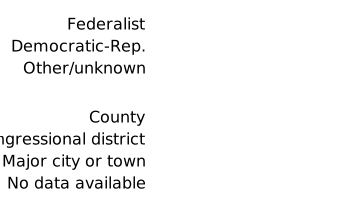
This page includes an interactive map. A text version of the same election data is available in the table below the map.
South Carolina elected eight Democratic-Republicans to the Tenth Congress.
South Carolina used the district system for electing members to Congress.
In 1807, a special election was held in which Joseph C. Calhoun was elected to replace Levi Casey, who died while in office.
| District | Candidate | Party | Vote | Percentage | Elected |
|---|---|---|---|---|---|
| 1 | Robert Marion | Democratic-Republican | 741 | 55.6% | ✓ |
| 1 | William Loughton Smith | Federalist | 581 | 43.6% | |
| 2 | William Butler | Democratic-Republican | 1,704 | 73.6% | ✓ |
| 2 | Richard B. Screven | Federalist | 607 | 26.2% | |
| 3 | David R. Williams | Democratic-Republican | 1,088 | 97.9% | ✓ |
| 4 | John Taylor | Democratic-Republican | 957 | 55.3% | ✓ |
| 4 | Henry Dana Ward | Federalist | 520 | 30% | |
| 4 | Miles B. Pinckney | Democratic-Republican | 247 | 14.3% | |
| 5 | Richard Winn | Democratic-Republican | 1,709 | 73% | ✓ |
| 5 | Anthony Butler | Federalist | 631 | 27% | |
| 6 | Levi Casey | Democratic-Republican | 1,301 | 49.6% | ✓ |
| 6 | John A. Elmore | Federalist | 654 | 24.9% | |
| 6 | Joseph C. Calhoun | Democratic-Republican | 640 | 24.4% | |
| 7 | Thomas Moore | Democratic-Republican | 2,337 | unopposed | ✓ |
| 8 | Lemuel James Alston | Democratic-Republican | 1,088 | 39.7% | ✓ |
| 8 | William Hunter | Democratic-Republican | 830 | 30.3% | |
| 8 | Elias Earle | Democratic-Republican | 821 | 30% |
In most cases, only candidates who received more than 5 percent of the vote in a district are reported. Other candidates are reported as a group, but only if they in aggregate received more than 5 percent of the vote. In addition, percentages for each district may not add up to 100 percent due to rounding. The term Dissenting Republican includes various breakaway factions of the Democratic-Republican party.
New Nation Votes Data
Legend
Related Maps
How to Read This Map
Four steps to get started.Citation
“10th Congress: South Carolina 1806,” Mapping Early American Elections, https://earlyamericanelections.org/maps/meae.congressional.congress10.sc.county.html